





Every year, lakhs of students across India dream of becoming doctors. But securing an MBBS seat in India has become one of the toughest challenges, with more than 23 lakh candidates appearing for the NEET exam in 2025, competing for just about 1.18 lakh medical seats nationwide. The intense competition, escalating fees in private colleges, and limited government seats have forced many aspirants to explore options abroad.
This write-up compares the journey of pursuing MBBS in India and abroad, to help students make an informed decision.
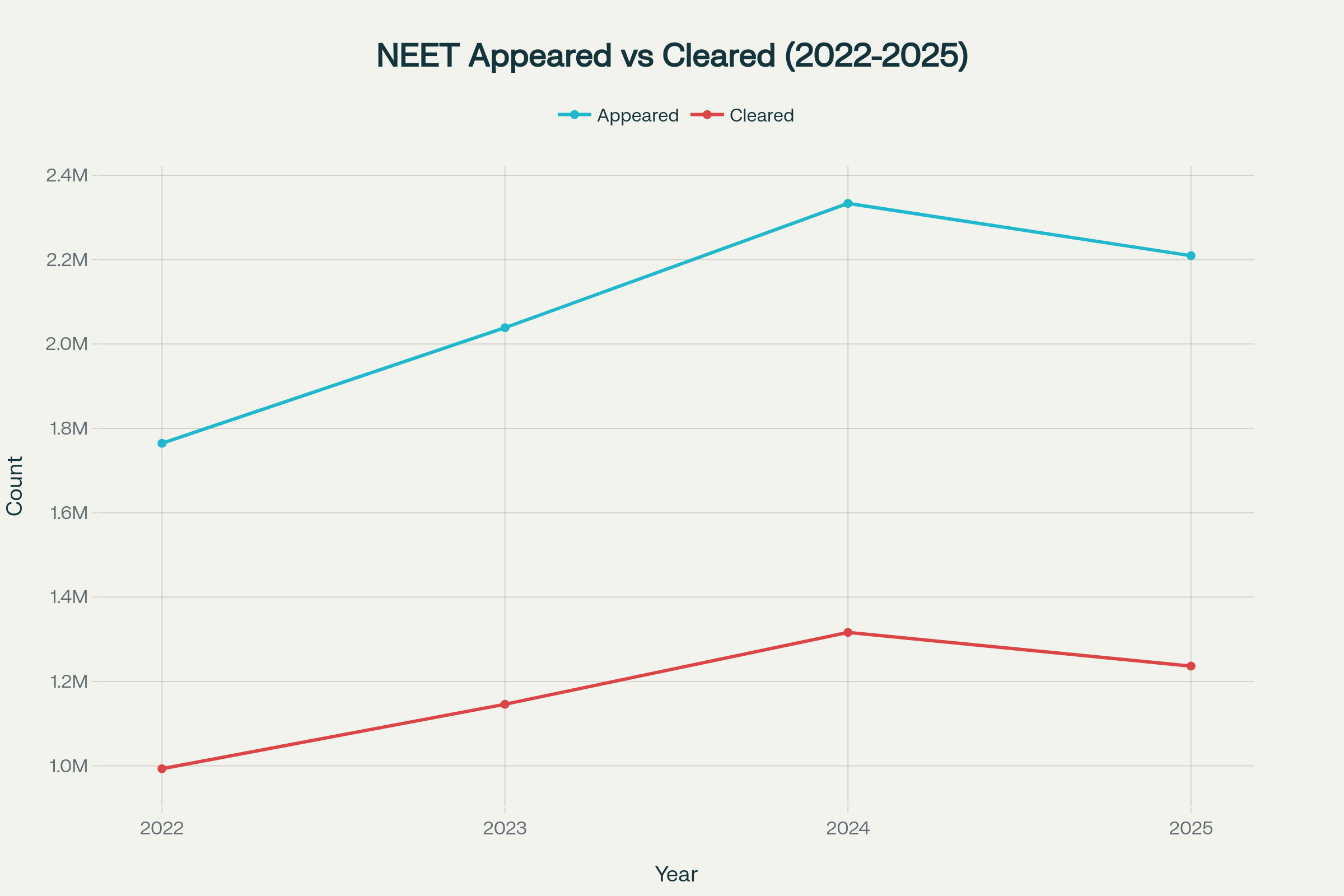
As per the Press release from NTA, the numbers of NEET applicant are increasing year by year.
(Table is only for reference)
| Year | 2022 | 2023 | 2024 | 2025 |
| Number of Appeared | 1764571 | 2038596 | 2333297 | 2209318 |
| Number of NEET cleared | 993069 | 1145976 | 1316268 | 1236531 |
Safety: A Basic Necessity
Safety is paramount for any student venturing into medical studies. India, being one’s home country, naturally offers a sense of security and familiarity. For those opting to study abroad, it’s comforting to know that many universities provide separate hostels for Indian students, along with Indian caretakers to assist with adjustments and any challenges. The safety standards in reputed foreign universities are robust, and comprehensive safety measures are in place to protect international students.
Ultimately, whether in India or abroad, students can expect to live in secure environments, supported by their communities and institutions.
Fee Structure: A Key Deciding Factor
One of the main concerns for most families is the cost of education. India’s government medical colleges offer very affordable fees, often under ₹1 lakh per year, but limited seats make admissions highly competitive. Private colleges in India come with hefty tuition fees ranging from ₹8 lakhs to 30 lakhs annually, making them unaffordable for many.
In contrast, many foreign medical universities — especially in countries like Russia, Kazakhstan, Philippines, and some European nations — offer high-quality medical education at much lower costs, generally ₹3 to 5 lakhs per year. This increased affordability, combined with quality education, makes studying abroad an attractive option.
Course Duration and Structure
MBBS in India spans 4.5 years of academic study followed by a mandatory 1-year internship, totaling 5.5 years. Abroad, the course often lasts between 6 to 7 years, which may include additional preparatory courses or clinical internships depending on the country. While the duration is slightly longer abroad, the international clinical exposure and hands-on experience often exceed what is available in many Indian institutions.
Eligibility and Admission Criteria
The eligibility norms for MBBS admissions in both India and abroad are similar. Students must clear the NEET exam, completed 12th grade in the science stream with subjects Physics, Chemistry, and Biology, and meet the minimum passing marks (50% for general category and 40% for reserved categories). This ensures that students opting for foreign medical education maintain a consistent academic standard.
Admission in India primarily depends on NEET result ranks, with government colleges admitting the top scorers. Abroad, many universities have simpler admission processes without the need for additional entrance exams, providing more accessible pathways for Indian students.
Language of Instruction and Cultural Comfort
English serves as the medium of instruction for medical courses both in India and across many international universities, reducing language barriers for Indian students. Furthermore, Indian food availability worldwide means students need not worry about dietary adjustments. Many universities abroad have active Indian student communities, enabling cultural assimilation and support.
Clinical Exposure and Infrastructure
One of the most critical parts of medical education is clinical exposure. Both Indian and foreign colleges strive to provide practical, hands-on experience with patients. However, some foreign colleges, particularly in Europe and Russia, emphasize early clinical exposure with access to modern hospitals and diverse patient demographics. This can prepare students better for varied medical scenarios in their careers.
Degree Recognition and Career Scope
Degrees from recognized foreign medical universities obtained through foreign MBBS admission are globally acknowledged, allowing graduates to pursue careers in various countries subject to clearing local licensing exams like the FMGE or NExT to practice in India. India-based MBBS degrees provide the advantage of immediate eligibility to practice without additional hurdles.
Studying abroad also opens doors for postgraduate studies globally, while Indian graduates primarily compete for limited postgraduate seats at home.
Unique Advantages of Studying MBBS Abroad
- Global Exposure: Students experience diverse healthcare systems, different disease patterns, and an international patient base, enhancing their medical understanding.
- Modern Teaching Methods: Many foreign universities use up-to-date technology, digital learning tools, and modern labs, improving the learning process.
- Scholarships and Financial Aid: Several countries and universities offer scholarships to international students, making education more affordable.
- Work Opportunities: In countries like the USA or UK, students can often take up internships or part-time medical research roles, adding valuable experience to their resume.
- Personal Growth: Living abroad encourages independence, adaptability, and cross-cultural communication skills — all essential traits for future doctors.
Challenges of Studying MBBS Abroad
- The necessity to clear additional licensing exams (like FMGE/NExT) before practicing in India.
- Initial adjustment to new languages, weather, and cultures can be challenging.
- Distance from family and loved ones may cause homesickness.
- Visa formalities and travel expenses add to the complexity.
Why MBBS in India Remains Relevant
- Government medical colleges provide quality education at low cost, attracting top rankers.
- Close-to-home environment with easier access to family support.
- More familiar clinical settings aligned with local healthcare needs.
- Immediate recognition and registration with medical councils in India.
Final Thoughts: Which is Better?
The choice between MBBS in India vs MBBS abroad depends on your personal circumstances, goals, and resources. If you can secure an affordable government seat in India, it is usually the best option. However, given the fierce competition, rising fees in private colleges, and increasing availability of quality education abroad, many students find studying MBBS abroad a worthy alternative.
Studying abroad not only saves money but also provides a broader global perspective, higher chances of securing postgraduate seats internationally, and exposure to cutting-edge medical technologies. With the right preparation and mindset, an MBBS degree from abroad can be as valuable — if not more — than one from India.
How Vishwa Medical Admission Point Can Help
Making such a significant decision requires expert guidance. Vishwa Medical Admission Point offers personalized counseling and support, ensuring you choose a path aligned with your academic achievements, financial plan, and career aspirations. They provide comprehensive details about safety, fees, universities, eligibility, application processes, and visa requirements for studying MBBS both in India and abroad.
This comprehensive comparison reflects the latest data from NEET 2022 to 2025 and current trends in medical education. The choice is highly individual, but armed with this information, students can confidently plan their medical career journey.
If you wish, Vishwa Medical Admission Point can assist at every stage of your admission journey to make it smooth and successful.