



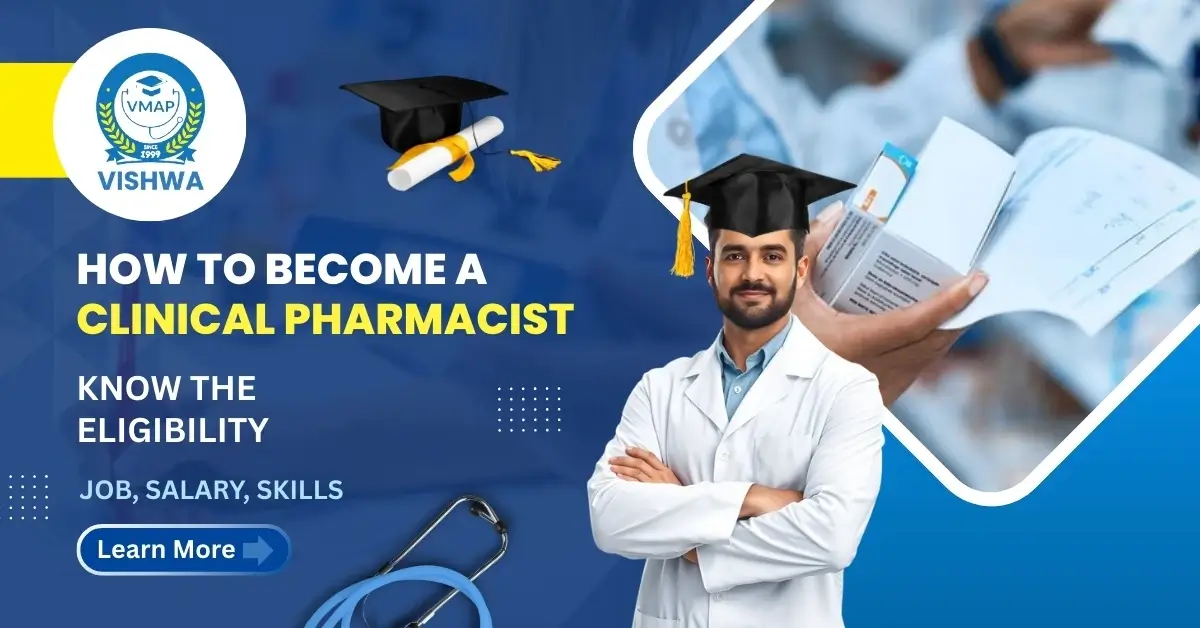
You might want to know how to become a clinical pharmacist if you enjoy science and helping patients directly in healthcare settings. Clinical pharmacists collaborate with doctors and nurses to manage medications and improve treatment results for individuals in hospitals or clinics.
This article explains the necessary steps, education paths, and career prospects, including ways to study internationally. As healthcare demands increase, many students explore how to become a clinical pharmacist to contribute effectively to medical teams.
What Does a Clinical Pharmacist Do?
Clinical pharmacists review patient medical records and recommend appropriate drug treatments while monitoring for potential side effects. They also teach patients how to use medications correctly to avoid mistakes that could harm health. For instance, they adjust dosages for patients with specific conditions like liver problems to ensure safety and effectiveness. Organizations such as the American College of Clinical Pharmacy highlight that these professionals often focus on fields like infectious diseases or pediatrics to provide specialized care.
Healthcare systems rely on clinical pharmacists to prevent errors in prescribing drugs, which impact thousands of people annually across the world. You should learn these duties early when you consider how to become a clinical pharmacist in your future career plans.
Educational Requirements for Becoming a Clinical Pharmacist
You start the journey on how to become a clinical pharmacist by completing an undergraduate degree in subjects like biology or chemistry for foundational knowledge. This phase typically lasts two to four years and includes courses in human anatomy, microbiology, and basic pharmacology principles. After that, you enroll in a Doctor of Pharmacy program, known as PharmD, which forms the core of your professional training.
PharmD programs require four years of intensive study, combining lectures, laboratory sessions, and supervised clinical experiences in real healthcare environments. To gain admission, you submit strong academic records, letters from mentors, and possibly scores from tests like the Pharmacy College Admission Test. Some institutions no longer require that test, so you check each school’s specific entry rules before applying.
In the PharmD curriculum, you study topics such as pharmacokinetics, therapeutic drug monitoring, and ethical practices in pharmacy to prepare for patient-centered roles. Many graduates then pursue postgraduate residencies to develop advanced skills in clinical settings over one or two years.
Eligibility Criteria for PharmD Programs
People often ask about the eligibility criteria needed to enter PharmD programs as part of how to become a clinical pharmacist. You generally need a high school certificate with high grades in science subjects like physics, chemistry, and biology to qualify for entry. International applicants demonstrate proficiency in English through standardized tests such as TOEFL or IELTS to ensure they can handle the coursework.
PharmD abroad eligibility includes submitting verified academic transcripts and sometimes undergoing credential evaluations for foreign qualifications. These standards help programs select candidates who can succeed in the demanding training required for clinical pharmacy careers.
Steps in How to Become a Clinical Pharmacist
Follow these essential steps if you aim to learn how to become a clinical pharmacist and build a successful career in this field.
- Complete high school education with emphasis on science courses to establish a strong base for further studies in pharmacy.
- Obtain a bachelor’s degree in a science-related discipline or finish required pre-pharmacy classes at a college level.
- Submit applications to accredited PharmD programs, including personal statements and interviews to showcase your motivation and skills.
- Graduate from the PharmD program after four years of academic and practical training in various pharmacy aspects.
- Participate in a residency program for one or two years to gain hands-on experience in hospital or clinic environments.
- Pass licensing examinations such as the North American Pharmacist Licensure Examination and any state-required tests for legal practice.
- Seek board certification from recognized bodies to demonstrate expertise in specific clinical pharmacy areas for career advancement.
This process usually requires six to eight years of commitment, but it equips you with the knowledge needed for how to become a clinical pharmacist.
How Long Does It Take to Become a Clinical Pharmacist?
You can expect the timeline for how to become a clinical pharmacist to range from six to ten years based on your educational choices and pace. Accelerated programs allow entry directly after high school, shortening the total time to about six years for dedicated students. Most individuals complete two years of undergraduate prerequisites before entering the four-year PharmD phase, followed by residency training.
If you already hold a bachelor’s degree, you shorten the path by focusing only on PharmD and postgraduate requirements. Part-time options or life interruptions might extend the duration, so you plan your schedule carefully to meet goals in how to become a clinical pharmacist.
Job Outlook and Salary for Clinical Pharmacists
Experts predict positive job growth for clinical pharmacists as healthcare needs expand with population changes around the globe. The U.S. Bureau of Labor Statistics forecasts a 5% increase in pharmacist positions from 2024 to 2034, creating approximately 15,400 new opportunities in the field. By 2030, this trend could result in about 9,000 additional roles, especially in clinical settings where patient care demands rise steadily.
Clinical pharmacists earn competitive salaries that reflect their specialized training and responsibilities in medical teams. The median annual pay for pharmacists reached $137,480 in May 2024, while those in hospital clinical roles averaged $149,240 according to reliable data sources. Your location, years of experience, and work setting influence earnings, with outpatient care positions offering up to $152,980 on average.
Exploring Clinical Pharmacy Course Abroad
You might consider a clinical pharmacy course abroad to access diverse training methods and international standards in pharmacy education. This choice exposes you to global healthcare practices and strengthens your professional network for future opportunities.
For clinical pharmacist study abroad, popular destinations include countries with advanced pharmacy curricula and research facilities. Clinical pharmacy admission overseas involves meeting academic standards similar to local programs but adding immigration requirements like student visas.
When you pursue a clinical pharmacist degree abroad, evaluate program costs and funding options to manage expenses effectively. Clinical pharmacy fees abroad differ by location, with annual tuition in the United Kingdom ranging from 15,000 to 25,000 pounds for overseas students.
Examine this table that compares PharmD or equivalent programs in selected countries for informed decisions.
| Country | Program Duration Eligibility | Average Annual | Fees (USD) | Notable Universities |
| USA | 4 years after undergraduate | Bachelor’s degree, English test scores, minimum GPA of 3.0 | 20,000 to 60,000 | University of California San Francisco and Purdue University |
| UK | 4 years for MPharm | High school sciences, IELTS score of 6.5 or higher | 20,000 to 35,000 | University of Manchester and King’s College London |
| Canada | 4 years for PharmD | Prerequisite courses, CASPer assessment, language proficiency | 15,000 to 30,000 | University of Toronto and University of British Columbia |
| Australia | 4 years for BPharm or MPharm | Secondary education diploma, IELTS 6.5, science foundation | 25,000 to 40,000 | University of Sydney and Monash University |
Universities and educational databases provide these details for PharmD abroad eligibility and other program aspects. Always confirm current requirements directly with schools when planning how to become a clinical pharmacist through international studies.
Differences Between a Pharmacist and a Clinical Pharmacist
Traditional pharmacists primarily dispense medications in community settings and verify prescriptions for accuracy and compliance with regulations. Clinical pharmacists, however, actively participate in patient care teams by consulting on therapies and conducting assessments in medical facilities. This distinction requires clinical pharmacists to complete additional residency training beyond the basic PharmD degree for specialized expertise.
Both roles demand a PharmD qualification, but clinical positions emphasize direct involvement with healthcare providers and patients for optimal outcomes. You recognize these differences when deciding your path in how to become a clinical pharmacist.
How Vishwa Medical Education Point Supports Your Journey
Vishwa Medical Education Point operates as a study abroad consultant in Delhi with extensive experience in medical admissions processes for aspiring students. Our consultants assist you by reviewing application materials, preparing for interviews, and selecting programs that align with your academic background and career objectives. For example, we guided one student through the application for a PharmD program in Canada by highlighting their strengths in prerequisite science courses.
We provide reliable advice on visa applications, scholarships, and program selections to simplify your steps in how to become a clinical pharmacist. Our reputation in medical education consulting comes from successful placements and personalized support for each individual.
Challenges and Tips to Become a Clinical Pharmacist
You face challenges like rigorous coursework and extended study hours when pursuing how to become a clinical pharmacist in competitive programs. Financial burdens from tuition and living expenses require careful budgeting, but scholarships and work-study options offer practical relief for dedicated learners.
To overcome obstacles, maintain organization in your studies and connect with mentors for guidance on complex topics. Join professional pharmacy organizations during school to build networks and stay informed about industry developments like emerging drug therapies.
Conclusion
This overview shows that how to become a clinical pharmacist demands structured education, practical training, and ongoing commitment to professional growth in healthcare. You complete degrees, residencies, and certifications to prepare for roles that improve patient care and safety. Projections indicate steady job increases through 2030, making this field a viable choice for motivated individuals. Local or international paths, supported by consultants like Vishwa Medical Education Point, help you achieve success in how to become a clinical pharmacist.
Also Read
How to Become a Pulmonologist
How to Become a Gastroenterologist
How to Become a Nephrologist
How to Become a Pathologist