



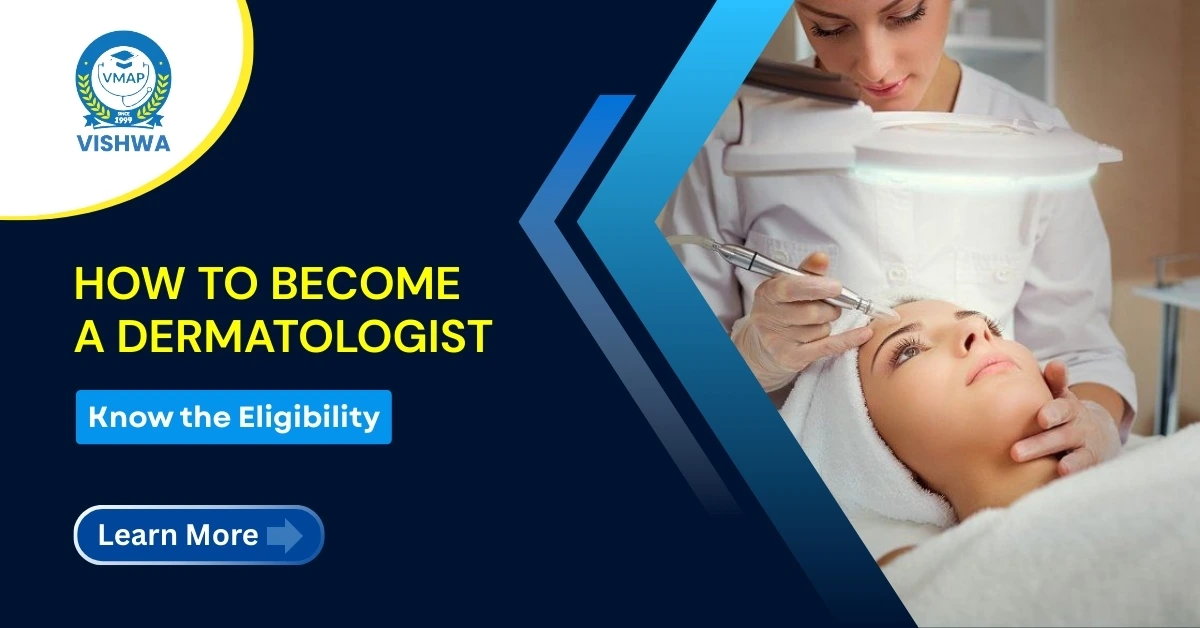
Do you want to know exactly how to become a dermatologist? This guide explains every step in a simple and clear manner. Dermatology is the medical field that focuses on skin, hair, and nail problems. Doctors in this field treat common issues like acne and serious conditions like skin cancer.
Many students find this career exciting because it mixes science with direct patient care. However, you need to put in years of hard work and consistent effort. At Vishwa Medical Education Point, we regularly guide students who choose this path, especially when they plan to pursue dermatologist study abroad.
Who Can Become a Dermatologist? Eligibility Requirements Explained
Students often ask us what eligibility criteria they must meet to learn how to become a dermatologist. You first need a strong foundation in science subjects during your school years. After 12th grade, you should complete a bachelor’s degree in biology, chemistry, or a similar subject. In many countries, medical schools require you to clear entrance exams with good scores.
For MD dermatology abroad eligibility, you must finish your MBBS degree before you apply for postgraduate training. Countries like the UK and Australia ask for additional licensing exams on top of your basic degree. Our team at Vishwa Medical Education Point helps students prepare documents and study plans to meet these requirements successfully.
Step-by-Step Academic Journey to Become a Dermatologist
Your journey to understand how to become a dermatologist starts right after school with undergraduate studies. You will spend four years completing pre-medical courses such as anatomy and biochemistry. These subjects build the base you need for medical school admission. Once you enter medical school, you study general medicine for another four years.
During medical school, you get practical exposure through hospital rotations in various departments. Many students discover their interest in skin diseases during the dermatology rotation period. One student we guided at Vishwa Medical Education Point decided on this specialty after spending time in skin clinics.
Dermatology Residency and Advanced Specialization Options
After you complete medical school, you must join a residency program to learn how to become a dermatologist. This training phase usually lasts three to four years depending on the country you choose. You work daily with senior doctors and handle real patient cases under their guidance. Residency teaches you how to diagnose skin conditions and perform minor procedures accurately.
If you want deeper knowledge, you can add a fellowship in areas like cosmetic or pediatric dermatology. This extra training helps you stand out when you start your independent practice later.
Dermatology Courses Abroad: Countries, Duration & Benefits
A large number of students now prefer a dermatology course abroad for better training facilities. You gain exposure to advanced equipment and a wide variety of patient cases overseas. Many Indian doctors strengthen their skills through a skin specialist course overseas.
Medical PG abroad dermatology programs exist in several popular countries around the world. Here is a clear table that compares the main options available to students:
| Country | Program Duration | Main Requirements | Approximate Annual Fees (USD) |
| USA | 3-4 years residency | USMLE exams and completed medical degree | 50,000 – 100,000 |
| UK | 4-5 years specialty training | PLAB exam and GMC registration | 40,000 – 80,000 |
| Australia | 4 years training | AMC exams and medical qualification | 45,000 – 90,000 |
| Germany | 5 years residency | German language and recognized degree | 20,000 – 50,000 |
| Canada | 5 years residency | MCC exams and language proficiency | 30,000 – 70,000 |
Dermatology abroad fees depend on scholarships, living costs, and currency exchange rates. We at Vishwa Medical Education Point match each student’s profile with the most suitable country. For example, one student we assisted picked Australia and completed training with excellent clinical experience.
Here are short points that highlight key features of each destination:
- USA: Places strong emphasis on research and new treatment methods.
- UK: Provides extensive clinical practice through the national health system.
- Australia: Offers good balance between studies and personal life quality.
- Germany: Remains affordable once you learn the local language well.
- Canada: Follows a patient-centered approach similar to American training.
You should choose the country that aligns best with your career goals and budget.
Dermatology Education Costs: Tuition, Living & Other Expenses
You must plan finances carefully when you decide how to become a dermatologist. Undergraduate courses often cost between twenty thousand and fifty thousand dollars each year. Medical school fees usually rise higher during the four-year program period. Residency programs pay you a basic salary that covers daily living expenses.
When you study abroad, tuition and accommodation costs vary across different countries. Many students secure scholarships or bank loans to manage these expenses properly. Our counselors at Vishwa Medical Education Point create detailed budget plans based on real student experiences.
Duration Required to Become a Dermatologist
Most students want to know how long they need to study to become a dermatologist. The total time usually adds up to twelve to fourteen years after school. You spend four years on undergraduate studies and four more in medical school. Residency and possible fellowship take another three to five years of training.
Demand for qualified skin specialists continues to grow steadily across the world by 2030.
Is Dermatology a Difficult Career Choice?
Yes, the path to become a dermatologist requires serious effort and dedication. Residency seats remain limited and competition stays high every single year. You need excellent academic records, research work, and strong recommendation letters. However, students who start preparation early and gain clinical exposure often secure seats.
Dermatologist Job Scope, Salary & Career Growth
Qualified dermatologists enjoy stable jobs and good earning potential in most countries. Skin health awareness increases demand for specialists in both medical and cosmetic fields. Experienced doctors earn comfortable salaries that reward their long years of training.
Popular Dermatology Subspecializations to Explore
After basic training, you can choose focused areas within dermatology practice. Common subspecialties include cosmetic procedures, lab-based skin pathology, and children’s skin treatments. Each option allows you to build the exact career you want.
Daily Work Life of a Dermatologist
Dermatologists examine patients, perform skin biopsies, and prescribe suitable treatment plans daily. They balance quick consultations with longer surgical procedures in the clinic. This variety makes every working day interesting and fulfilling.
Conclusion
Now you know the complete process of how to become a dermatologist step by step. You need consistent education, practical training, and sometimes international exposure for success. The field offers rewarding opportunities for students passionate about skin health care. At Vishwa Medical Education Point, we use our study abroad expertise to help you gain admission confidently. Start your preparation today and build a strong future in dermatology.
Also Read
How to Become a Neurologist
How to Become a Cardiologist
How to Become a Gynecologist
How to Become a Pediatrician