




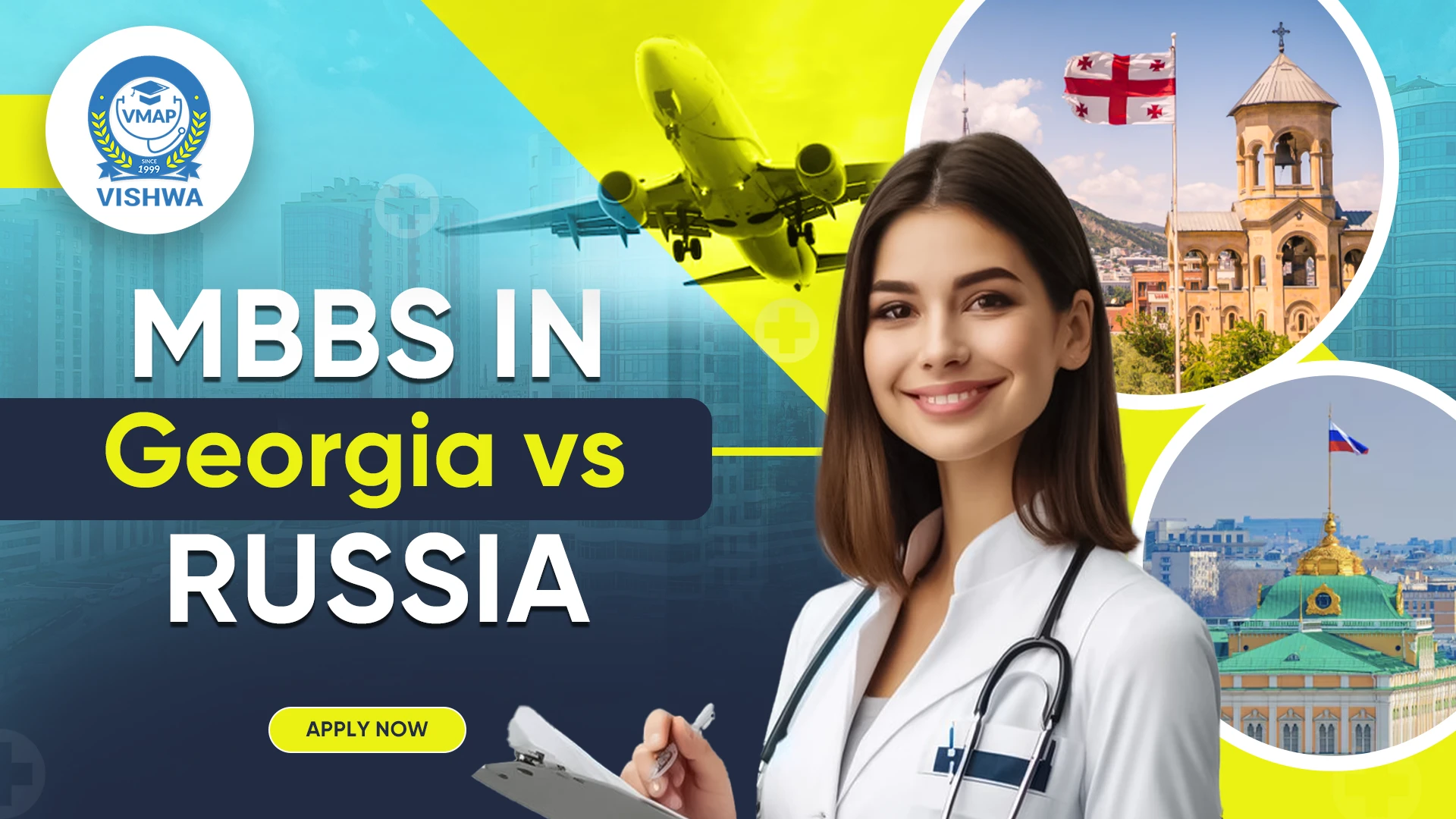
Picking the right country for your MBBS degree is a big deal for Indian students dreaming of becoming doctors. The choice between MBBS in Georgia vs Russia comes up a lot because both offer affordable fees, solid education, and degrees recognized worldwide.
At Vishwa Medical Admission Point, we’ve been helping students like you since 2010, making this decision easier with clear, honest advice. This guide breaks down MBBS in Georgia vs Russia by looking at eligibility, costs, education quality, and student life, using 2030 stats and reliable sources to help you decide what’s best for you.
Why Look at MBBS in Georgia vs Russia?
Georgia and Russia are popular picks for Indian students chasing a medical degree without breaking the bank. For example, more than 20,000 Indian students study MBBS abroad in 2030, and among them, Georgia and Russia will be selected by 50% of them due to low cost and NMC approved medical colleges.
But every country has its advantages and drawbacks. Let’s get into the details so you can determine which is right for you, your goals and your budget.
Who Can Apply for MBBS in Georgia vs Russia?
One of the most asked questions is, “What do I need to qualify for MBBS in Georgia or Russia?” While both the countries keep it simple, there are minor differences:
- Georgia: You must have at least 50% in PCB in your 12th grade exams. Indian students are supposed to clear the NEET exam, as stated by the NMC. You must also be 17 by Dec. 31 of the admission year. No additional tests such as the IELTS or TOEFL are required. Schools such as Tbilisi State Medical University accept students with a NEET score and 50% in PCB, making the process simple.
- Russia: Russia asks for 50% in PCB for general category students, or 45% for SC/ST/OBC students in 12th grade. NEET is a must, and you should be between 17 and 25 years old by the end of the admission year. Some universities, like Kazan State Medical University, might ask for an online entrance test, but not all do.
What’s Different: Georgia’s process is easier since it sticks to NEET without extra exams, while Russia might throw in a university-specific test. At Vishwa Medical Admission Point, we check your documents and guide you through applications, like we did for Priya Sharma, who got into Geomedi Medical University in Georgia in 2029 with our help.
How Much Does MBBS Cost in Georgia vs Russia?
Money matters a lot when choosing a medical school. The MBBS fees in Georgia vs Russia are both way cheaper than private colleges in India, where you could pay over ₹50 lakh for the whole course.
- Georgia: In 2030, yearly tuition fees for MBBS in Georgia range from $4,000 to $8,000 (about ₹3.4 lakh to ₹6.8 lakh). For the full 6-year program, including hostel costs, you’re looking at ₹25–40 lakh. Some schools, like Batumi Shota Rustaveli State University, offer scholarships if you score above 55% in PCB, which can cut costs.
- Russia: MBBS fees in Russia are a bit lower, between $2,500 and $6,000 per year (roughly ₹2.1 lakh to ₹5.1 lakh). The total for six years, including accommodation, comes to about ₹15–30 lakh. For example, Pavlov First Saint Petersburg State Medical University charges as little as ₹3 lakh a year.
What’s Different: Russia is often the cheapest option for MBBS: Georgia vs Russia, but Georgia can be more affordable with scholarships. At Vishwa, we’ve helped students like Arjun Patel compare fees and find loans, ensuring no surprise expenses.
What’s the Cost of Living Like in Georgia vs Russia?
Besides tuition, the cost of living in Georgia vs Russia for Indian students is a big factor in your decision.
- Georgia: Life in Georgia costs from $200 to $500 (₹17,000–₹42,500) per month including food, housing, and transport requirements. In the capital, Tbilisi, hostels generally charge $200 a month, while private apartments cost $300 to $500. Indian food is available at university canteens, and students receive a 50% discount on public transportation.
- Russia: Living costs in Russia are similar, about $150–$350 a month (₹12,750–₹29,750). Big cities like Moscow are pricier, but smaller ones like Kazan are cheaper, with hostel fees as low as $30–$50 monthly. With over 15,000 Indian students in Russia in 2030, you’ll find Indian food and a strong community.
What’s Different: Russia is slightly cheaper, especially in smaller cities, but Georgia’s lower inflation rate (under 3% in 2030) makes it feel more stable. We at Vishwa help students like Rohan Kumar find affordable housing, like a university hostel in Tbilisi that fit his budget.
How Do Hostel Fees Compare in Georgia vs Russia?
Where you live matters, and the hostel fees comparison Georgia vs Russia shows both countries offer budget-friendly options:
- Georgia: University hostels cost $150–$300 a month. They’re safe, separate for boys and girls, and often include Indian food options. For example, Geomedi Medical University provides furnished hostels with heating and Wi-Fi for about $200 a month.
- Russia: Russian hostels are cheaper, costing $30–$100 monthly. Schools like Crimea Federal University offer modern dorms with security and Indian mess facilities for as little as $50 a month.
What’s Different: Russia wins for lower hostel fees, making it a budget MBBS option for Indian students. We at Vishwa make sure students like Anjali Kapoor find safe, comfy hostels by working directly with universities.
How Good Is Education and Degree Recognition?
Both Georgia and Russia offer MBBS degrees approved by the NMC and WHO, so they’re recognized worldwide. But their teaching styles differ:
- Georgia: Georgian universities use a Western-style curriculum taught entirely in English, following the Bologna Process. This makes their degrees valid in Europe, the USA, and Canada, perfect if you’re eyeing postgraduate studies abroad. In 2030, Georgia’s FMGE passing rate is 38%, higher than Russia’s, thanks to its focus on English and hands-on clinical training.
- Russia: Russian schools lean toward research-heavy education with great facilities. Many offer English-medium programs, but some courses might require learning Russian, which can be tough. Russia’s FMGE passing rate in 2030 is 32%, slightly lower due to language challenges.
What’s Different: Georgia is better for students who want English-only classes and a higher FMGE pass rate, while Russia suits those interested in research. Vishwa ensures you pick NMC-approved universities to avoid degree recognition issues.
What’s Student Life and Safety Like?
Feeling safe and happy is priority number one when studying abroad. Both counties are relatively welcoming, but with different vibes:
- Georgia: Georgia is super safe, low on crime and has friendly people. Tbilisi and Batumi, among others, are perfect cities for students, with modern facilities and fun cultural events. You can even work part-time under local regulations to help pay your way.
- Russia: Russia also has a very active student life with 2030 hosting more than 200,000 figures of international students. Cities like Moscow have many cultural experiences to offer, but long, cold winters can be difficult on Indian students. Close links between India and Russia provide a conducive atmosphere.
What’s Different: Georgia’s warmer climate and part-time job options make it cozy, while Russia’s diverse student life appeals to those who love a bustling atmosphere. Vishwa’s local team helped students like Sana Shaikh settle into Georgia’s student life with ease.
What Are Your Career Options After MBBS?
After your MBBS, Indian students need to pass the FMGE (or NExT in 2030) to practice in India. Graduates from both countries can also study further or work abroad:
- Georgia: Georgian degrees open doors in Europe and North America for postgraduate studies. The higher FMGE pass rate boosts your chances of practicing in India.
- Russia: Russian degrees are accepted globally, but some universities require an extra Gozz Exam, which can be a hassle. Graduates often pursue research or practice in Europe.
Vishwa offers FMGE coaching and career advice, helping students like Pankaj Pandey move smoothly into their medical careers.
Why Trust Vishwa Medical Admission Point?
With 15 years of experience, Vishwa Medical Admission Point has guided thousands of Indian students to MBBS programs in Georgia and Russia. We keep things transparent, from picking the right university to sorting out visas, with no hidden fees. We work with top NMC-approved schools and offer round-the-clock support, like we did for Rahul Verma, who joined Kazan State Medical University in 2029. Check out www.vishwamedical.com for personalized help.
Wrapping Up
Deciding on MBBS in Georgia vs Russia comes down to what matters most to you. Georgia has English only classes, better FMGE pass rate, and a warm student life, making it a perfect fit for anyone looking for a Western education. Russia is cheaper and research-oriented, which suits the budget students. Both are top choices in 2025 for Indian students, due to low costs and international recognition. We at Vishwa Medical Admission Point are with you throughout the whole process, to make the admission process a delight and to build your future having a successful medical career. Contact us today to begin!
Also Read
MBBS in Georgia vs Philippines
MBBS in Georgia vs Armenia
MBBS in Georgia vs Egypt