




If you’ve just finished your MBBS and you’re the kind of person who gets excited about fixing broken bones, replacing worn-out joints, or getting an athlete back on the field, then the MD Orthopaedic Course is probably a good fit for your goals. It’s the next big step after MBBS, and honestly, it’s one of the most rewarding specializations you can pick.
At Vishwa Medical Admission Point, we have 25+ years experience and we’ve helped thousands of students figure out exactly how to move from their MBBS seat (whether in India or abroad) straight into a solid PG ortho program. So everything you’re reading here comes from real conversations we have every single day with students like you.
Orthopaedics is a fast growing industry in India. By 2030, experts say the orthopaedic device market alone will cross $3 billion because more people are living longer and staying active. That means more knee replacements, more sports injuries, and a lot more need for well-trained ortho surgeons. If that excites you, keep reading – we’ll walk you through everything, no fluff.
What is MD in Orthopaedics Full Form and Meaning?
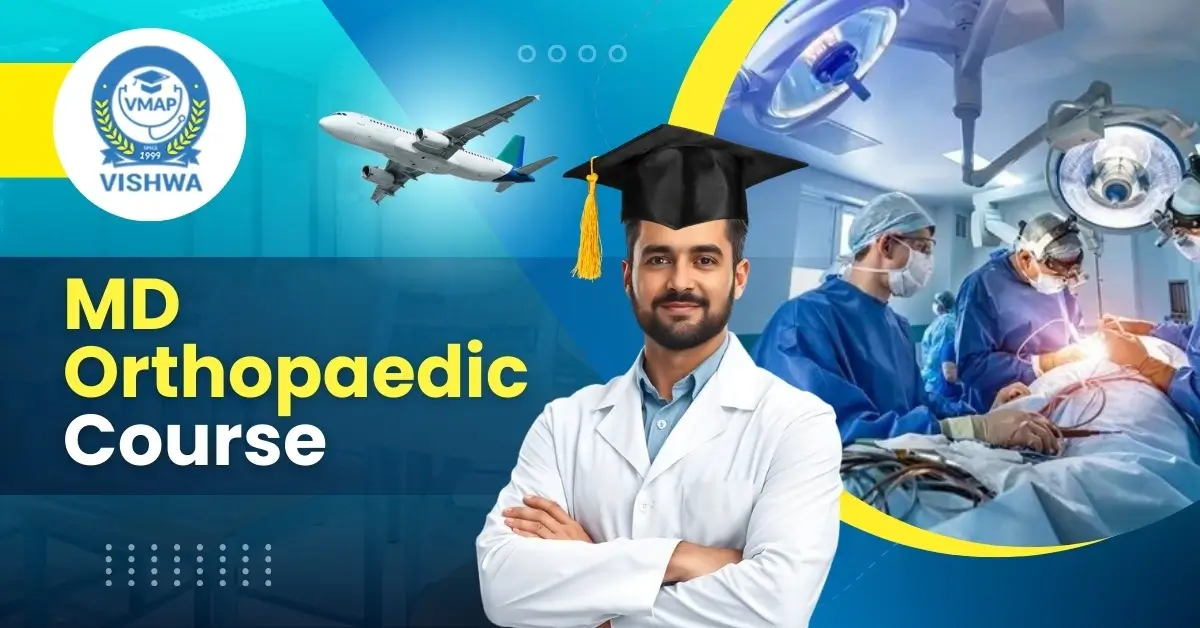
MD Orthopaedics means Doctor of Medicine in Orthopaedics. It’s a three-year postgraduate course that turns a general doctor into a bone-and-joint specialist. You learn everything – from reading X-rays properly to doing complex surgeries on the spine, knee, hip, shoulder, hand, basically anything that helps people move without pain.
One of our students from Coimbatore told me, “Ma’am, I chose ortho because I like seeing results the same day – a patient walks in with a limp and walks out straight.” That’s exactly what this branch is about.
Who Can Do the MD Orthopaedic Course?
To get a seat, you need:
- Completed MBBS + 1-year internship
- Valid NEET-PG scorecard
- Permanent registration with NMC (or state council)
That’s it on paper. In reality, the cutoff rank for a good government seat is usually under 8000–10,000 (general category), and it keeps changing every year. We track these cutoffs daily at Vishwa Medical Admission Point so our students know exactly where they stand.
A lot of students ask us, “I did my MBBS from abroad – will my degree work?” Yes, as long as your university is in the NMC list and you’ve cleared the FMGE/NExT (whichever is applicable by the time you apply).
How Long is the Course and What Do You Actually Study?
The course duration is three years. The first year is mostly theory + basic ward work. Second and third year, you’re in the OT almost every day, assisting and then doing surgeries yourself under supervision.
You’ll rotate through trauma, spine, joints, paediatric ortho, hand surgery, sports medicine. By the time you finish, you should be comfortable putting plates on a fracture, doing an ACL reconstruction, or even assisting in a total knee replacement.
MD Orthopaedics Course Fees in India
Government colleges: ₹5,000 – ₹80,000 per year (yes, really that low in some states).
Deemed/private colleges: ₹20–42 lakh per year depending on the college and your NEET rank.
We have students who joined government seats in Maharashtra and Karnataka for less than ₹1.5 lakh total fees, and we have others who happily paid ₹40–60 lakh in a top private college because they wanted to stay close to home. Both are fine – it’s about what fits your family and career plan.
Career Options After MD Orthopaedics
Most fresh MDs start as junior consultants and take home ₹1.2–2 lakh per month in a good hospital. After 3–4 years of experience, many open their own nursing home or clinic and easily cross ₹4–8 lakh per month in Tier-2 cities. Senior surgeons in metro cities with a busy joint-replacement practice often earn more than ₹2 crore a year. The numbers are real – we see it with our old students every year.
You can also go into academics, sports medicine teams (IPL/franchise teams love young ortho surgeons), or even super-specialize further.
Want to Go Even Deeper? Here Are the Popular Fellowships
- Pediatric orthopaedics training (for clubfoot, scoliosis, kids with cerebral palsy)
- Arthroscopy and sports injury management (knee/shoulder key-hole surgery, huge demand of this course)
- Spine and trauma surgery specialization (everyone needs a good spine surgeon)
- Orthopaedic oncology fellowship (bone cancer cases – done at places like Tata Memorial)
- Hand and reconstructive surgery training (very satisfying, very precise work)
Most of these are 1–2 years extra after your MD, and many hospitals pay you a stipend during the fellowship.
Cost of Orthopaedic Clinical Training
Even after paying college fees, you’ll spend some money on workshops – basic arthroscopy course ₹60,000–₹1 lakh, cadaveric spine course ₹80,000, etc. But trust me, every rupee is worth it because these hands-on workshops are where you actually learn the tricks that no textbook teaches.
Future of Orthopaedic Care in India
By 2030, India will be doing more than 6 million orthopaedic procedures every year. Robotic surgery, 3D-printed implants, and stem-cell treatments are already here in the big hospitals. The only thing missing? Enough trained surgeons. That’s why anyone who finishes a good MD Orthopaedic Course today is pretty much guaranteed a solid career for the next 30–40 years.
I still remember one of our earliest students – he joined a small 50-bed hospital in Nashik after his MD in 2016. Last month he sent us photos of his brand-new 200-bed orthopaedic super-specialty hospital. That’s the kind of growth this field offers.
Conclusion
At Vishwa Medical Admission Point, we’ve been doing this long enough to know which colleges have the best OT exposure, which professors let PG students operate early, and which states give the easiest stipend. If you’re serious about the MD Orthopaedic Course and want someone to guide you without any nonsense, just drop us a message. We’ll tell you exactly what your rank can get and how to plan the next three years.
Also Read
MD Opthalmology Course
MD General Medicine Course
MD Radiology Course
MD Dermatology Course