


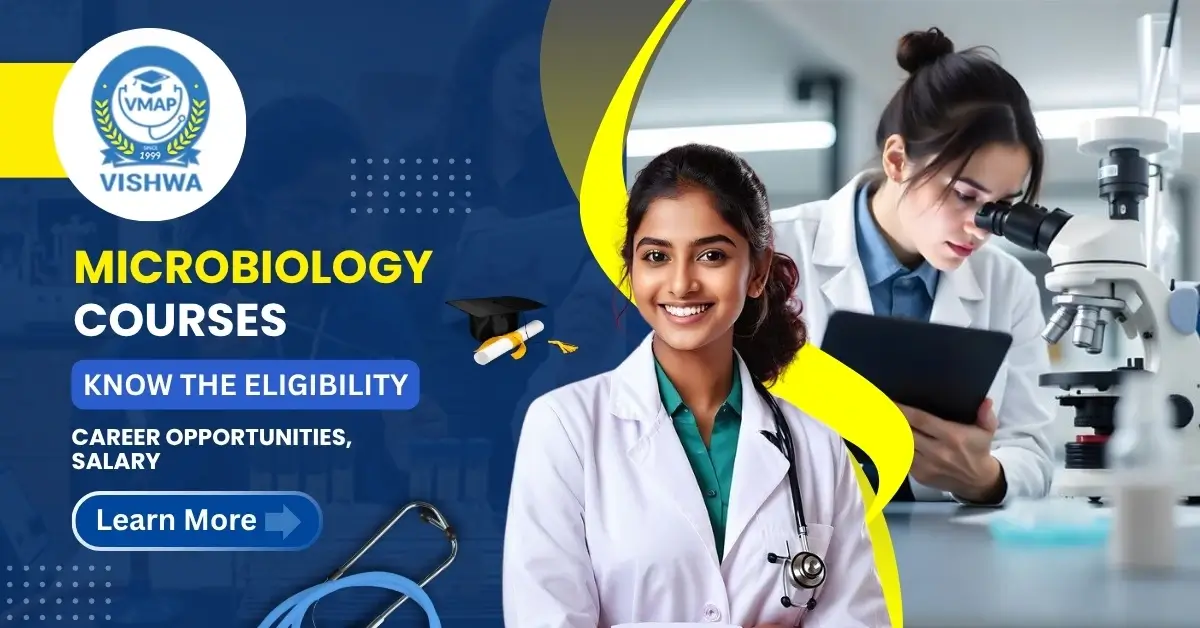
Microbiology courses teach you the tiny organisms that impact our world so much like bacteria, viruses, fungi, and more. These microbes also play a role in health issues, food safety, the environment, and new technologies.
At Vishwa Medical Education Point, we’ve spent years helping students find the right microbiology courses, whether they’re staying in India or heading abroad. As study abroad consultants, we’ve walked many students through the entire process-from picking programs to handling applications and visas, and seen them land spots in solid universities.
The courses usually dive into how these microorganisms work, grow, and interact. You’ll cover basics like microbial genetics, immunology, and lab methods, with plenty of hands-on practice in culturing samples, running tests, and analyzing results.
Why Choose Microbiology Courses After 12th
People are drawn to this field because microbes are everywhere and constantly creating new challenges and opportunities. In healthcare alone, we’re still grappling with infections and antibiotic resistance, while biotech companies rely on microbes for vaccines, enzymes, and sustainable products.
The U.S. Bureau of Labor Statistics projects that microbiologist jobs should grow by about 4% from 2024 to 2034, which is about average, with about 1,700 openings each year, often from replacements as people retire or change fields.
In India, fresh graduates in this area often start around ₹3-4 lakhs per year, based on recent data from sites like AmbitionBox and SalaryExpert. With a few years under your belt, that can climb to ₹8-15 lakhs or higher, especially in pharma labs, hospitals, or quality control roles. A strong microbiology bachelor’s degree or further study really helps push those numbers up.
One student came to us interested in a microbiology course abroad in the UK. We went over their marks, helped strengthen their personal statement, and pointed out scholarship options they ended up with an acceptance and some funding support.
What Are the Eligibility Criteria for Microbiology Courses?
If you have a science background, getting admission isn’t usually too difficult. For bachelor’s programs, most places require the following:
- 10+2 completion (or equivalent) with Physics, Chemistry, and Biology.
- Around 50-60% aggregate marks, though top universities might want higher.
- For programs abroad, proof of English skills through tests like IELTS or TOEFL.
Master’s programs typically need a bachelor’s in microbiology, biology, or a close field, plus decent grades. Some require entrance tests, either national ones in India or university-specific abroad.
We always start by reviewing your actual marks and background. If you’re lacking something, like additional lab experience, we’ll offer practical ways to improve it before you apply.
Course Duration for Microbiology Programs
The length depends on the level and country:
- Bachelor’s degree: 3 years in places like the UK or India, often 4 years in the US or Canada.
- Master’s: Usually 1-2 years.
- Some combined programs run 5 years straight through.
There are also shorter diplomas or certificates (6-12 months) for specific skills, like advanced lab work or diagnostics.
Best Countries for Microbiology Course Abroad
Going abroad means access to better equipment, research projects, and international networks. Here are some popular options:
- United States: Known for top-tier research and funding (think places like universities with strong biotech ties).
- United Kingdom: Shorter master’s programs and solid medical microbiology focus.
- Germany: Often low tuition and excellent science departments.
- Australia: Lots of practical training plus post-study work options.
- Canada: Friendly policies for international students and pathways to stay longer.
Here’s a quick comparison table:
| Country | Bachelor’s Duration | Master’s Duration | Main Benefits | Approximate Annual Tuition (international) |
| United States | 4 years | 2 years | Cutting-edge labs, research grants | $30,000–$60,000 |
| United Kingdom | 3-4 years | 1 year | Prestigious degrees, quick master’s | £20,000–£40,000 |
| Germany | 3 years | 2 years | Very low or no tuition fees | Mostly admin fees only |
| Australia | 3 years | 1-2 years | Hands-on focus, work rights after study | AUD 30,000– 50,000 |
| Canada | 4 years | 2 years | Welcoming vibe, possible immigration | CAD 20,000– 40,000 |
We help narrow these down based on your budget, preferred climate, and long-term plans.
Different Types of Microbiology Courses
Not all programs are the same. Some typical programs include:
- Medical microbiology course: Focuses on disease-causing microbes, testing methods, and treatments-great if you’re leaning toward hospitals or diagnostics.
- General microbiology: Broader coverage, including environmental and industrial applications.
- Microbiology degree programs: Often let you specialize later in areas like virology, food safety, or immunology.
Labs are a big part – you’ll get real practice with microscopes, petri dishes, and data interpretation, which is what employers look for.
What Careers Come After Microbiology Courses?
You can end up in various places:
- Diagnostic labs or hospitals checking samples.
- Pharma companies working on drugs, vaccines, or quality checks.
- Food and beverage firms ensure products are safe.
- Research labs, government agencies, or teaching roles.
Demand looks steady through 2030, especially with ongoing needs in public health and emerging biotech. Salaries grow with experience and location.
Steps to Get Admission in Microbiology Courses
It starts with research find programs that match your interests. Review entry requirements, deadlines, and required documents like transcripts, letters of recommendation, and a statement of interest.
For applications abroad, we handle the details: comparing secure universities, building a strong profile (perhaps adding projects or certifications), and guiding you through visas and proof of funds.
Recently, we worked with a student traveling to Canada for a microbiology course abroad. We helped highlight their required coursework and extracurricular activities and they were accepted with little assistance.
Everything we do is practical and straightforward. No hype, just reliable support based on what we’ve learned from guiding students year after year.
Wrapping It Up
Microbiology courses prepare you for work in a field that’s always in demand. Whether it’s a microbiology bachelor’s degree, a course focusing on medical microbiology, or a microbiology degree program, you’ll gain skills that matter. Here at Vishwa Medical Education Point, we provide honest, experience-based counseling to simplify the admissions process. Contact us if you’d like to discuss your options. We’re here to help you with your next step.
Also Read
Genetic engineering courses
Nutrition and dietetics courses
Occupational therapy courses
Special education courses